Kien Giang · Gulf of Thailand
Phu Quoc without the resort bubble
Vietnam's island has two faces: the resort strip and the actual island. You want both — in the right order.
- Visa
- Visa-free up to 30 days*
- Best months
- Nov – Apr (dry season)
- Top beach
- Sao Beach, south
- Getting around
- Scooter or Grab car
The visa quirk that makes it easy
Phu Quoc is a special economic zone: most nationalities can enter visa-free for up to 30 days when flying directly to the island — even travelers who would normally need a Vietnam visa. If you plan to continue to the mainland, normal visa rules kick in, so check the current policy for your passport before booking a Hanoi leg.
Which beach is “the” beach
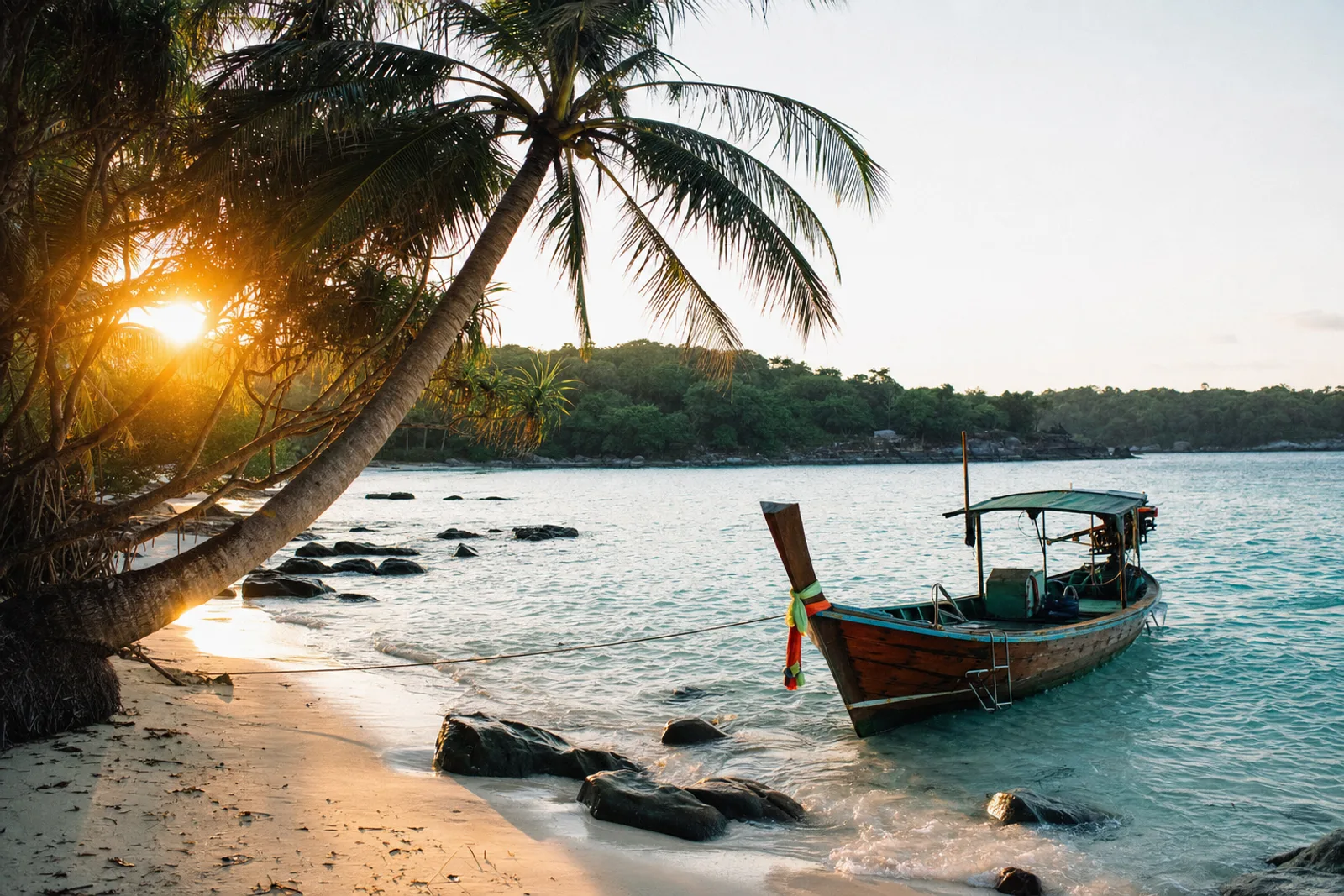
The postcard shots — white sand, leaning palms, glassy water — are Sao Beach in the south, not the west-coast strip where most hotels sit. Go early: by noon the beach clubs fill their loungers. Long Beach on the west is where you stay and watch sunsets; Ong Lang, further north, is the quiet compromise with the best golden-hour swimming.
One day in the south
Combine Sao Beach in the morning with the Hon Thom cable car after lunch — at almost 8 km it is the longest over-sea cable car in the world, and the ride across the fishing-boat harbors is worth it even if you skip the water park on the far side. On the way back, the An Thoi fish-sauce and pepper-farm stops are more interesting than they sound; both are Phu Quoc's actual historic exports.
Nights: one market, done right
Duong Dong night market is touristy and still worth one evening: go hungry, walk the full length once before buying anything, then work backwards through whatever looked best. Grilled scallops with peanuts and scallion oil, sea urchin, and the coconut ice cream are the safe bets. Prices are marked but friendly haggling on seafood is normal.
Renting a scooter, honestly
The island is big — 50 km top to bottom — and the best of it (the empty north-east coast, Rach Vem's starfish shallows) is only practical on two wheels or with a hired driver. Roads are good by Vietnamese standards, but ride only if you already ride at home, wear the helmet, and photograph the bike before you take it.
Money on the island
Resorts take cards; everything interesting takes cash or Vietnamese QR payments — the night market, beach shacks, scooter rental, fruit stands. ATMs on the island love fees, so most travelers set up a QR wallet app before arriving and top it up from home. You will pay local prices without ever hunting for an ATM.